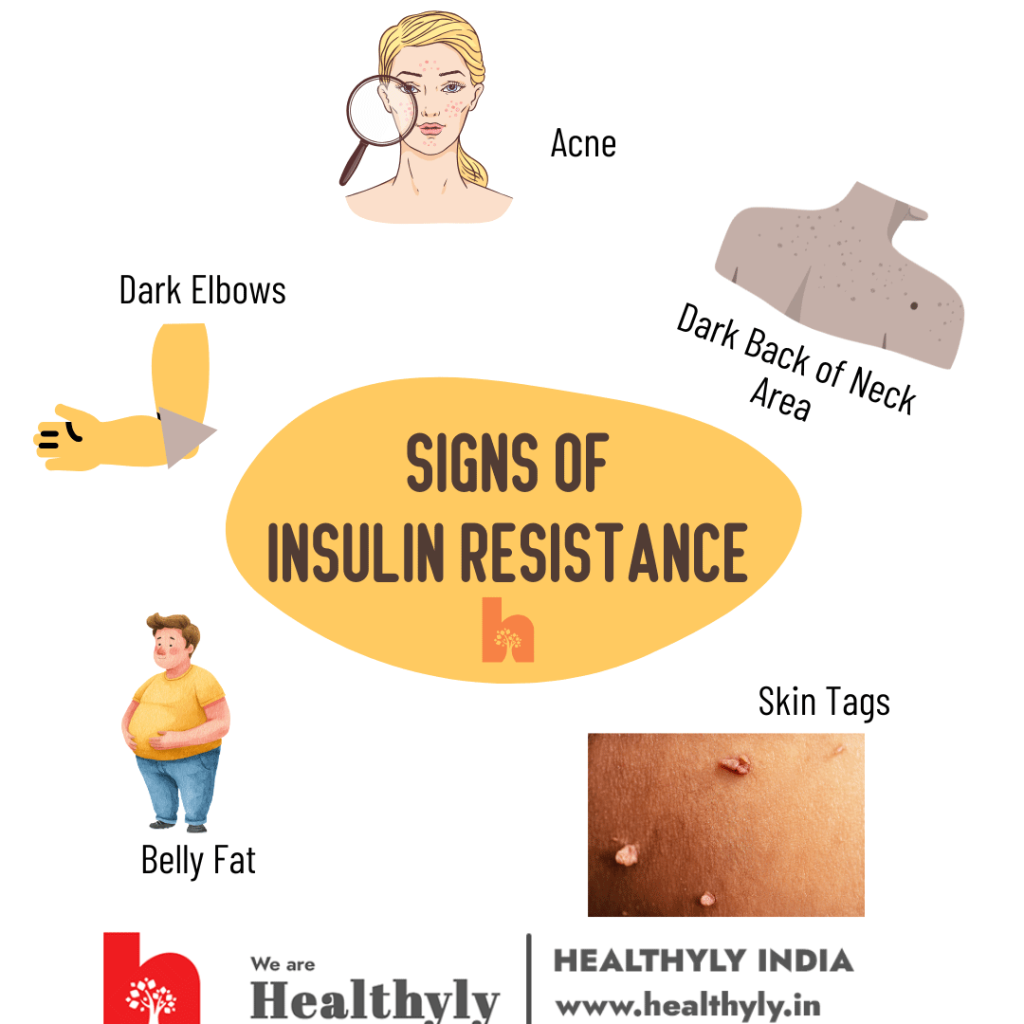
Insulin resistance poses symptoms like unexplained weight gain, a fat belly area, skin tags, acne and darkened elbows and the back of the neck.
These subtle symptoms are quite ignorable at first, but when seen collectively, they are the silent train to the diabetes station that nobody wants to board.
If you are suffering from any such symptoms too, then worry not, just follow this step-by-step plan, and you will be out of the clutches of insulin resistance in no time.
Without fluff, let’s jump on to the Solution –
Table of Contents
1. Optimal Salt Intake
Are you also asked to keep the salt low?
Well, that’s wrong advice, as a study on 150 people has proved that a low salt diet can actually increase insulin resistance.
A low salt diet activates the renin-angiotensin-aldosterone and sympathetic nervous systems, both of which can increase insulin resistance.
So the good news is, keep your salt intake optimal, neither high nor low!
2. Switch to a Low-Fat Diet
A low-fat diet is helpful in reducing insulin resistance because fat storage is low and digestion is easier.
Low-fat diets use less oil for cooking and avoid butter and fried foods.
Examples of low-fat diets include idli-sambhar, dal-chawal (lentils & rice), Dal chiila (lentil pancakes), sprouts, paneer, and everything made with the least oil.
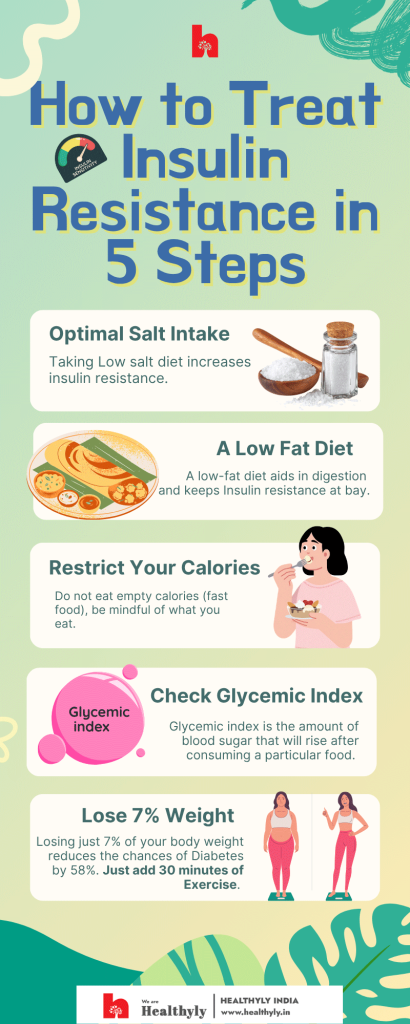
3. Restrict Your Calories
If you keep eating heavy food with heavy calories, your body will be in constant struggle to utilise and designate that food to its specific category.
This leads to various digestive problems, and sugar spikes, thereby leading to insulin resistance in future.
Don’t eat empty calories (read fast food), eat healthy, tasty and nutritious meals to keep the insulin resistance and many other health problems at bay.
4. Check the Glycemic Index of the Food Items You Regularly Eat
Glycemic Index is the amount of sugar spike your blood will have after eating that particular food item.
GI (glycemic index) varies as per the type of food item, how processed it is and at what stage it is eaten.
For example, immature or new potatoes have a lower GI than the old or mature potatoes, and cooling the cooked potatoes will lower the GI to 56 from hot boiled potatoes, which is 86.
Be it any vegetable or grain, checking out the GI is a safe bet.
The lowest GI vegetables and grains are broccoli, spinach, tomatoes, lentils, chickpeas, berries, apples, nuts, whole grain barley, whole grain oats, etc.
5. Reduce Weight
A 7% weight loss reduced the onset of type 2 diabetes by 58%.
So losing weight to reduce your chances of having diabetes in future is non-negotiable.
If you add consistent 30 minutes of daily exercise to your routine along with a low-fat diet and being mindful of your calories, then you will start losing weight in no time.
The key is to stay consistent; if you miss exercise one day, don’t miss it the next day. Because after 2 days, it becomes really difficult to go back to the routine, don’t break the cycle for more than one day.
6. Metformin
Don’t do this before asking your medical professional.
Taking a metformin tablet in this study reduced the onset of type 2 diabetes by 31%.
P.S – Do Not Take Any Medicine Without Asking Your Doctor.
Recommended Read – Supplements to Treat Insulin Resistance
Reference
https://www.ncbi.nlm.nih.gov/books/NBK507839/