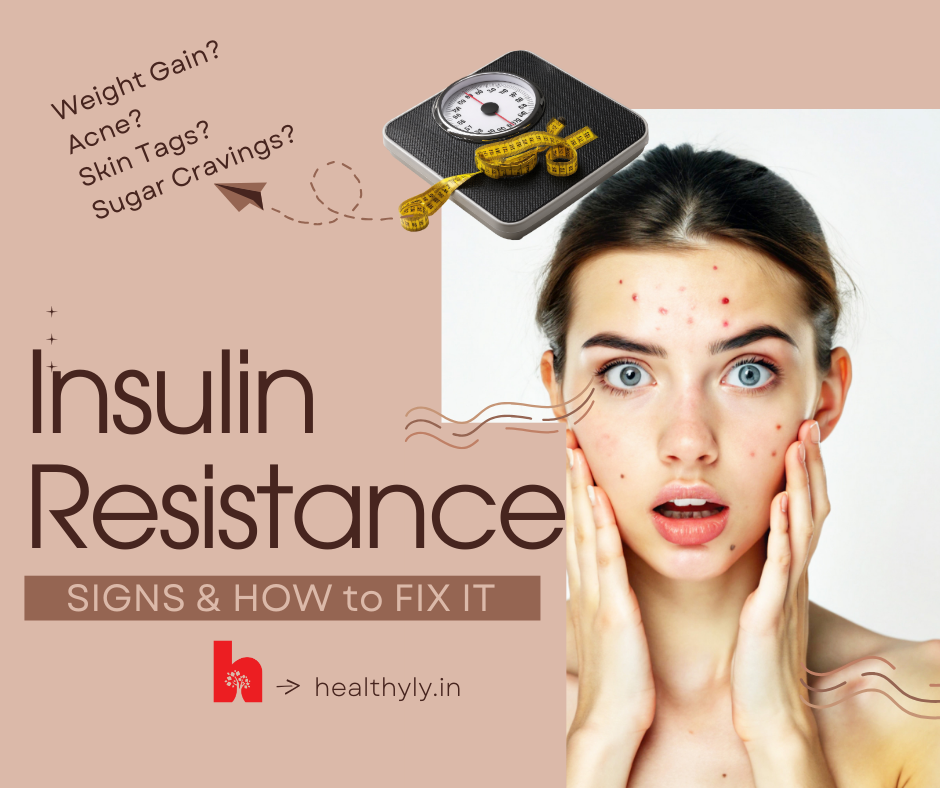
Insulin resistance is becoming increasingly common, especially in adults over 30, without people realising it, as the signs are often subtle and are mistaken for “normal weight gain” or routine skin issues.
Understanding the early symptoms of insulin resistance is important because timely lifestyle changes can help reverse it and reduce the risk of type 2 diabetes, PCOS, heart disease, metabolic syndrome, skin conditions like acne, and weight gain.
Table of Contents
What is Insulin Resistance?
Insulin is a hormone that helps utilise the sugar in the blood for energy and other purposes.
In insulin resistance, the body’s cells do not respond effectively to insulin. As a result, the pancreas produces more insulin to maintain normal blood sugar levels.
Over time, this leads to high insulin levels, increased fat storage, acne, and visible metabolic changes—often before blood sugar levels become abnormal.
Reasons for Insulin Resistance
- Inflammation in the body
- Fatty Liver Disease
- High Cholesterol Levels
- Hormonal Imbalance disorders like PCOS
Source – https://pmc.ncbi.nlm.nih.gov/articles/PMC9029454/
Common Signs of Insulin Resistance
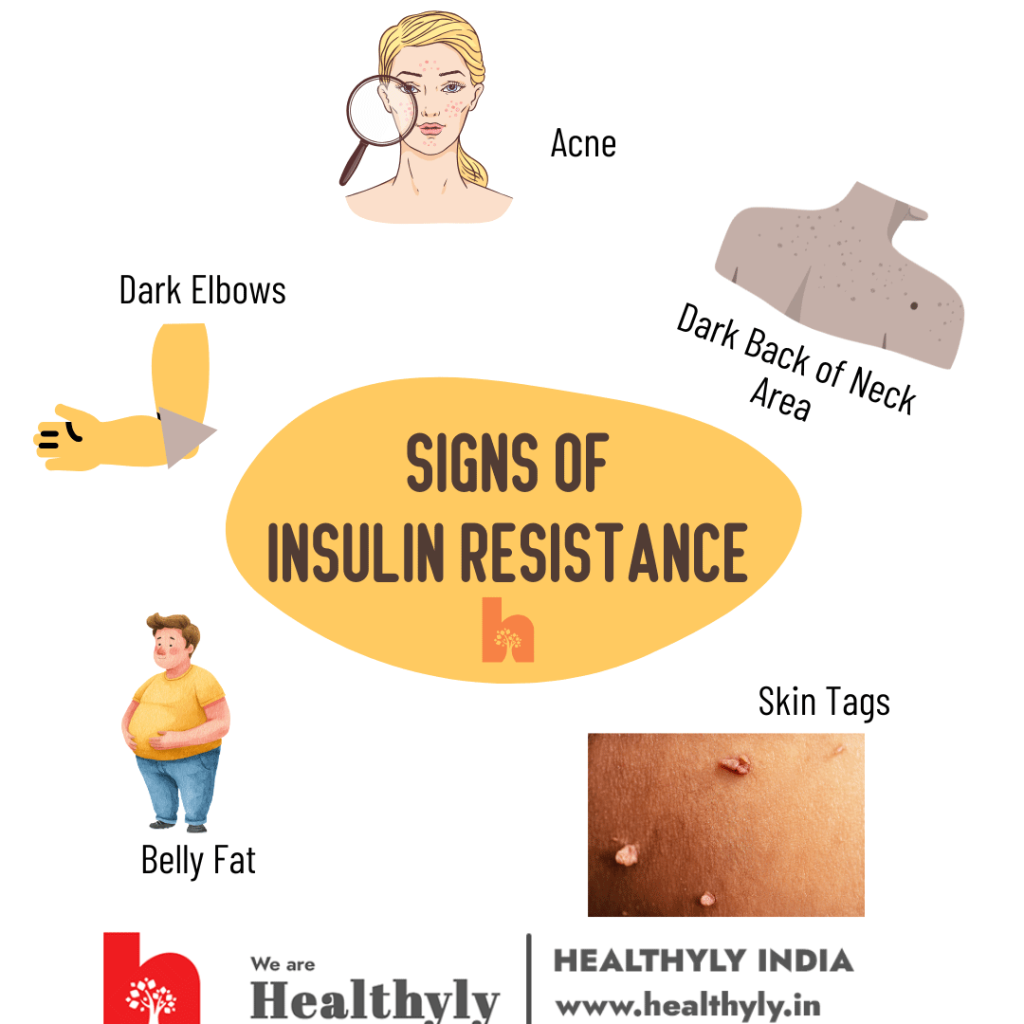
1. Unexplained Weight Gain
One of the earliest and most common signs of insulin resistance is gradual weight gain, especially despite eating a normal diet.
High insulin levels promote fat storage and make fat loss difficult, particularly around the abdomen.
2. Increased Abdominal Circumference
Central obesity is a strong indicator of insulin resistance.
- Women: Waist circumference greater than 80 cm
- Men: Waist circumference greater than 92 cm
Excess fat around the abdomen is closely linked to hormonal imbalance and inflammation.
3. High Waist-to-Hip Ratio
The waist-to-hip ratio reflects fat distribution in the body.
- Women: Ratio above 0.85
- Men: Ratio above 1.0
A higher ratio suggests increased visceral fat, which is strongly associated with insulin resistance and cardiovascular risk.
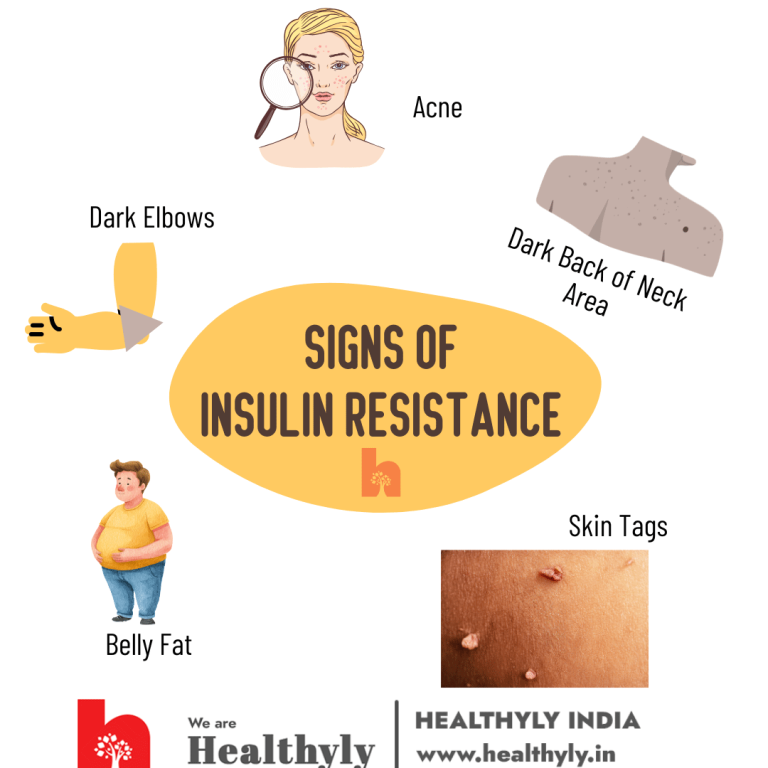
4. Skin Tags
Small, soft growths of skin—commonly found on the neck, underarms, or groin—are frequently associated with high insulin levels.
Skin tags are often one of the earliest visible signs of insulin resistance.
5. Acne (Especially Adult or Hormonal Acne)
Insulin resistance can increase androgen levels, which may trigger persistent acne, especially along the jawline, chin, and cheeks in women.
This is commonly seen in conditions like PCOS along with other symptoms like weight gain, excess facial hair, irregular periods, etc.
6. Darkened Skin on Elbows and Other Folds
Dark, thickened skin patches—often seen on the elbows, on the back of the neck, underarms, or knuckles—can indicate a condition called acanthosis nigricans, which is linked to high insulin levels.
Tests to Detect Insulin Resistance
One of the most reliable tests to detect insulin resistance is the HOMA-IR test, which is the Homeostatic Model Assessment of Insulin Resistance.
In this, two blood tests are performed: Fasting blood Glucose levels and Fasting Insulin levels.
Once the report is received, HOMA is measured by using this formula –
(Fasting Blood Glucose x Fasting Insulin) / 405
Results are measured as per the reading; a person has high chances of insulin resistance if the value comes out to be greater than 2.5.
Below 2.5 means normal insulin sensitivity; the lower the better.
Below 1 means you have nothing to worry about.
Between 1 and 2.5 means some lifestyle modifications will be a good choice.
Why Insulin Resistance Should Not Be Ignored
If left unaddressed, insulin resistance can progress to:
- Type 2 diabetes
- Hypertension
- PCOS and fertility issues
- Fatty liver disease
- Heart disease
- Chronic inflammation
The good news is that insulin resistance is often reversible, especially when identified early.
How to Fix Insulin Resistance Naturally at Home
Managing insulin resistance focuses on improving insulin sensitivity through sustainable lifestyle changes:
Also Read – Clinically Proven Supplements that fight Insulin Resistance
Balanced meals with Controlled Carbohydrate Intake
Don’t give in to the simple carbs, like sweets, cookies and all the tempting stuff with high glucose levels. A diet rich in fruits, vegetables, extra virgin olive oil and oilseeds is recommended to fight insulin resistance.
Regular Intake of Vitamin D
It goes a long way in keeping your body healthy, protecting it from various disorders and improving insulin sensitivity and blood sugar levels.
Increase Protein Intake
Low protein intake is one of the key factors of insulin resistance, and simply increasing your protein intake will improve your blood glucose control considerably.
Regular Physical Activity and Strength Training
Get a smart watch that counts your steps and hit that goal of 10k steps a day. This increases the energy expenditure as well (source).
Restoration of Gut Microbiota
Keeping your gut healthy and eating a gut-friendly diet that is rich in pro and prebiotics is also helpful in fixing the insulin resistance and protects from it too. Take curd, pickles, fermented food items to improve it.
Improve Sleep Hygiene
Sleeping and waking up at fix time every day sounds like a big deal in this era of easy entertainment, but you need to set a timer to your reels doomscrolling in order to make the most of your sleep.
Do you know that your hormonal and cardiac health depend a lot on your sleep?
Gradual and consistent weight loss
If you remain active physically and eat a balanced meal, then weight loss will feel effortless.
Be a little cautious about your weight and its fluctuations. So that you can act right when it starts increasing and can control it while it’s easy to.
Silymarin (Milk-Thistle)
If you are pre-diabetic or even a diabetic, taking silymarin with metformin may help in improving the insulin sensitivity and therefore help with the Insulin resistance.
Supplements for Insulin Resistance
Activate AMPK
AMP acitvated protein kinase is a compound that helps in protecting insulin sensitivity, and to activate it, there are a few things that you can do –
- Take vitamin K2
- If you are a pre-diabetic or diabetic who is taking metformin, then take silymarin (milk-thistle) with it
- Salvianolic Acid B is also an excellent AMPK activator
- Reverse Insulin Resistance in 5 Steps
Key Takeaways
- Check for the signs of insulin resistance, such as a black area behind the neck, elbow or knuckles, weight gain without any reason, skin tags, more than normal sugar cravings, etc.
- To fix the insulin resistance in your body, having a plant-based diet and regular exercise are the key factors that go a long way in protecting the body as well as fixing insulin resistance.
- If you are a pre-diabetic or a diabetic, then talk to your doctor about taking silymarin (milk-thistle) with metformin, along with vitamin K2.
Medical Disclaimer – This is not a substitute for medical advice; the articles on this website are written only to spread awareness and help people with their health and lifestyle. Please take your doctor’s advice beforehand.